Remediation
Ensuring Efficiency
As with all things, over time your Fire Dampers will become less effective. Dust, corrosion or mechanical wear can affect their performance. Testing regularly to ensure each Damper operates correctly, closes fully and can perform as intended in an emergency, can reveal components which are likely to fail. It is also an invaluable method of assessing the longevity of a particular component - if it looks likely to fail in future, we will address the issue today.
If any part of your system is found to be damaged, incorrectly installed or non-compliant, we will carry out essential remediation work and restore its performance. With updates and changes in legislation, it’s vital your Fire Dampers meet current legal requirements - what might have previously been an acceptable component could now be obsolete or even dangerous.
FreeflowAir in Action
Tek screws are a perfect example of how changing legislation can impact your Fire Damper system. The Building Engineering Services Association has recently drawn attention to the use of steel self-drilling (tek) screws in Fire Damper installations in the UK.
Whilst installers were likely working in good faith at the time, it has now been established that these screws are not heat-resistant. They can melt or fail at high temperatures and prevent Dampers from closing – compromising the effectiveness of your fire safety system.
Replacing screws might seem like a minor issue but it is a critical step in ensuring your Fire Dampers work correctly. If your existing installation uses tek screws, we will replace them with flush-fitting BSEN1366-2 compliant fixings.
This is just one example of the importance of conducting remedial work as quickly and efficiently as possible. Trust us to find and fix any potential issue with your Fire Damper system with the same commitment and expertise.
FreeflowAir in Action
Tek screws are a perfect example of how changing legislation can impact your Fire Damper system. The Building Engineering Services Association has recently drawn attention to the use of steel self-drilling (tek) screws in Fire Damper installations in the UK.
Whilst installers were likely working in good faith at the time, it has now been established that these screws are not heat-resistant. They can melt or fail at high temperatures and prevent Dampers from closing – compromising the effectiveness of your fire safety system.
Replacing screws may seem like a minor issue but it is a critical in ensuring your Fire Dampers work correctly. If your existing installation uses tek screws, we will replace them with flush-fitting BSEN1366-2 compliant fixings.
This is just one example of the importance of conducting remedial work quickly and efficiently. Trust us to find and fix any potential issue with your Fire Damper system with the same commitment and expertise.
Access Hatches & Doors
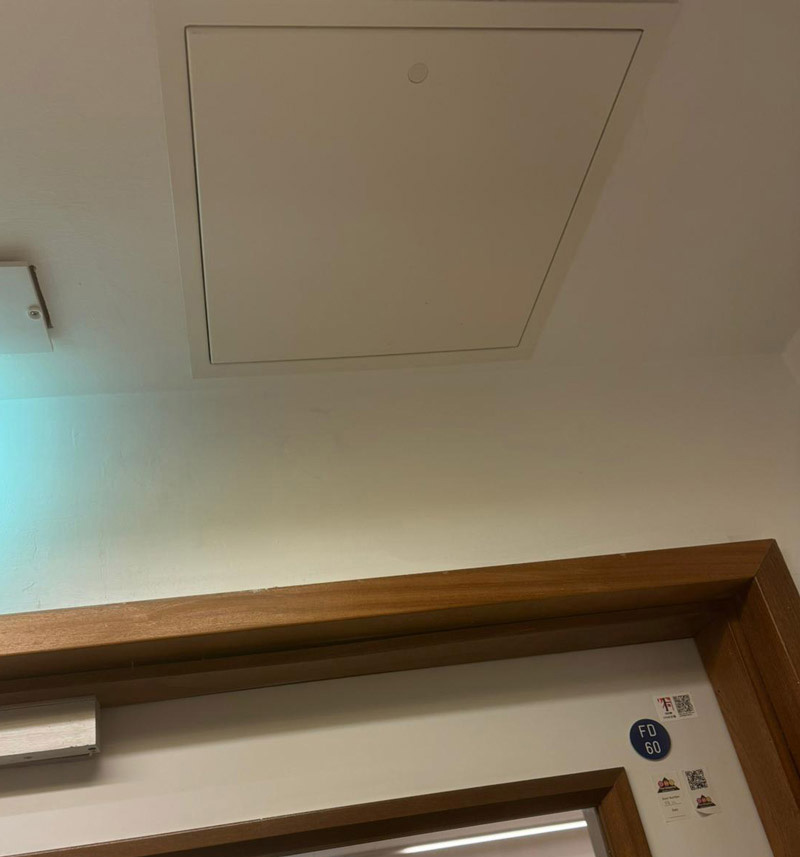
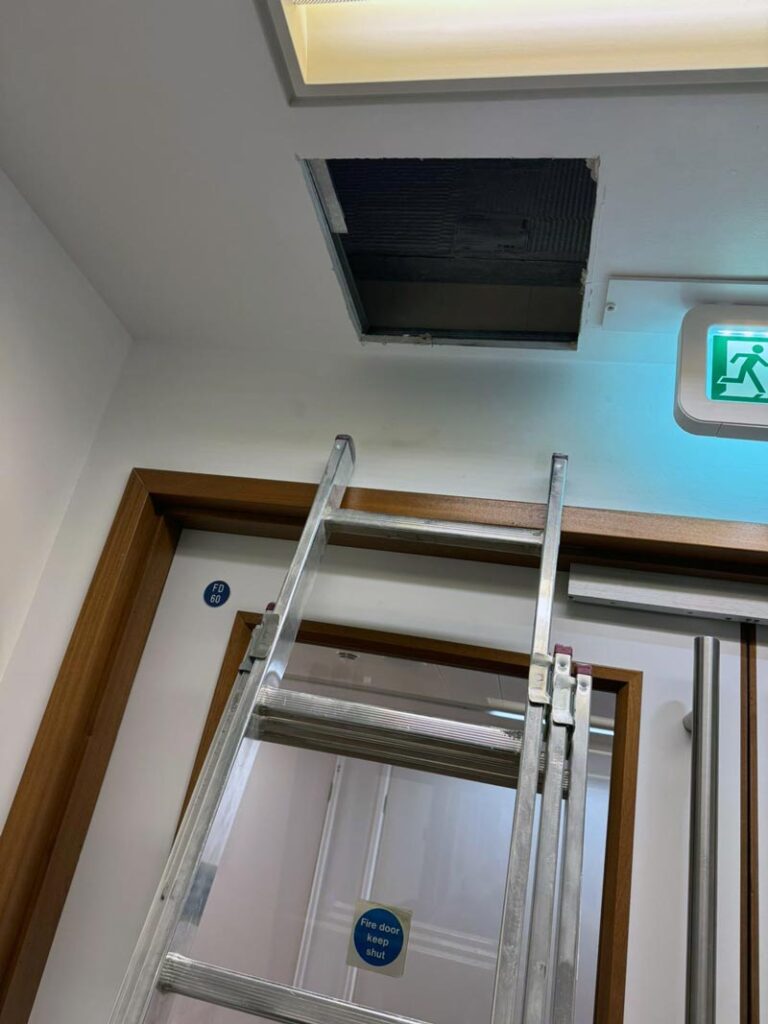
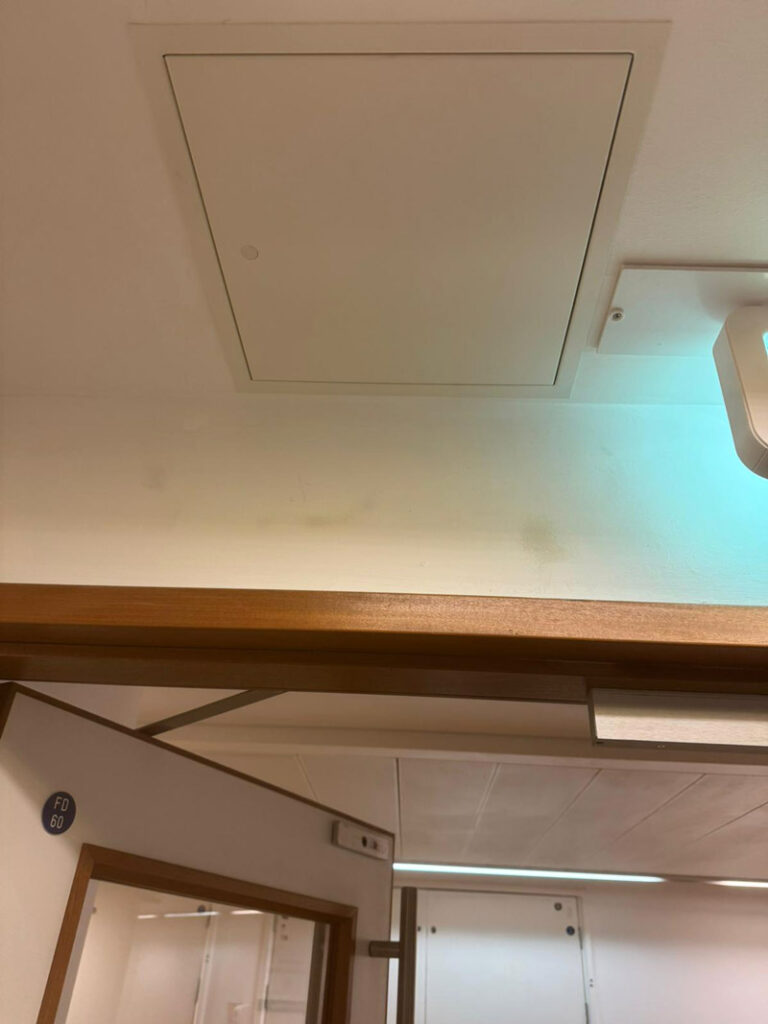
Coil and fusible link replacements are a regular part of our remedial works, along with the installation of ceiling hatches and access doors in older installations. By their nature Fire Dampers are most often installed above ceilings, behind walls and in restricted spaces. Without proper access it can be impossible to inspect or carry out remedial work safely and effectively.
By installing access doors on your existing system we make your Fire Dampers accessible without damaging ceilings or ducting. Strategically placed ceiling hatches enable engineers to perform targeted work through discrete fire-rated openings.
This ensures all future inspection, testing and maintenance can be carried out safely, efficiently and with minimal disruption to your operations.